
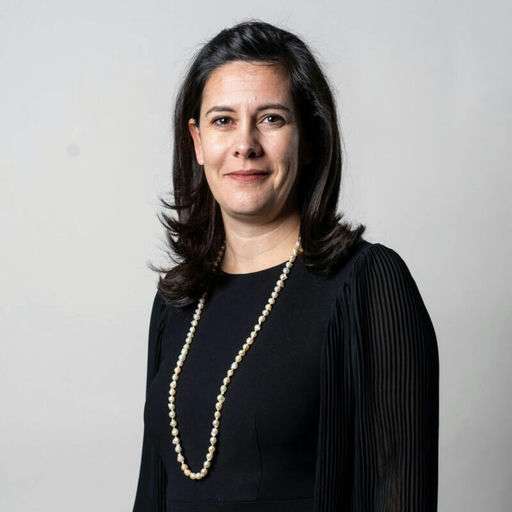
Alexis Prieur L’Heureux is Vice President at WestExec Advisors.
Prior to joining WestExec, Alexis most recently served as Chief of Staff for Congressman Seth Moulton (MA-06). Alexis ran his congressional office, including his work on the House Armed Services, Transportation and Infrastructure, and Budget Committees, and was also a Senior Advisor for his political action committee, Serve America. Alexis also served on President Joe Biden’s Presidential Transition Team as the lead for Department of Defense appointments. Before working on the Hill, Alexis served in President Obama’s Administration as a national security policy advisor at the Department of Defense (2009-2012, 2014-2017) and as a Deputy Executive Secretary at the U.S. Department of Treasury (2013-2014).
In addition to her government experience, Alexis has also worked to protect the vote for numerous campaigns at both the state and national levels, starting with then-Senator Obama’s 2008 primary campaign in New Hampshire. In 2017, Alexis co-founded All Voting Is Local, which is a non-profit that works to increase access to voting by improving how elections are run at the local level.
Alexis Prieur L’Heureux is Vice President at WestExec Advisors.
Prior to joining WestExec, Alexis most recently served as Chief of Staff for Congressman Seth Moulton (MA-06). Alexis ran his congressional office, including his work on the House Armed Services, Transportation and Infrastructure, and Budget Committees, and was also a Senior Advisor for his political action committee, Serve America. Alexis also served on President Joe Biden’s Presidential Transition Team as the lead for Department of Defense appointments. Before working on the Hill, Alexis served in President Obama’s Administration as a national security policy advisor at the Department of Defense (2009-2012, 2014-2017) and as a Deputy Executive Secretary at the U.S. Department of Treasury (2013-2014).
In addition to her government experience, Alexis has also worked to protect the vote for numerous campaigns at both the state and national levels, starting with then-Senator Obama’s 2008 primary campaign in New Hampshire. In 2017, Alexis co-founded All Voting Is Local, which is a non-profit that works to increase access to voting by improving how elections are run at the local level.
Alexis is a naturalized citizen and a graduate of Queen’s University in Canada and Northeastern University School of Law. Alexis resides in Washington, D.C., with her husband and their two young sons.
Beth Roberts is a foreign policy and development finance leader with more than 15 years of experience navigating complex geopolitical, regulatory, and investment environments to drive private sector-led development. Beth specializes in translating big-picture global dynamics into actionable strategies, detailed project management, and diplomatic advocacy to support sustainable growth and advance policy objectives.
As Vice President of the Office of Foreign Policy at the U.S. International Development Finance Corporation (DFC) during the Biden Administration, Beth launched and led a team of regional and sector policy experts focused on aligning DFC’s $50 billion global investment portfolio and business development strategy with U.S. foreign policy priorities—advising senior leadership, driving strategic stakeholder engagement, and helping integrate geopolitical risk and opportunity analysis across business lines.
Before joining DFC, Beth spent a decade at the Millennium Challenge Corporation (MCC), where she developed and managed infrastructure and agribusiness projects across Africa and South Asia. She also served as an advisor to MCC’s CEO, launched MCC’s Private Sector Advisory Council and led the Corporation’s first trade mission to Africa. Beth’s career began as a public affairs consultant at APCO Worldwide, supporting domestic and global health care clients. Her service in the Peace Corps in Mali sparked her passion for working at the nexus global business, foreign policy, and sustainable development.
Beth is a graduate of Elon University, and is a Truman National Security Project Security Fellow. She lives with her husband and two daughters in Washington, D.C.
Dr. Liz Sherwood-Randall is currently a Senior Fellow at the Harvard Kennedy School Belfer Center for Science and International Affairs. She has had a trailblazing career in national and homeland security, serving in key leadership roles at the White House, the Department of Energy, and the Department of Defense. Most recently, Liz worked in the West Wing from 2021-2025 as the Assistant to the President for Homeland Security and Deputy National Security Advisor. In that high stakes position, she pioneered Federal efforts to strengthen national preparedness for and resilience to emerging threats. She spearheaded Federal crisis management for a wide range of challenges including mass shootings, domestic and international terrorist attacks, extreme weather events, and critical infrastructure disruptions. She guided the development and implementation of new strategies to counter terrorism at home and around the world. She innovated policies to prevent, prepare, and respond to natural and pernicious biological risks, including mpox, avian flu, and the convergence of advances in biotechnology and artificial intelligence. She built a counter-fentanyl campaign involving Mexico, Canada, and China, and mobilized a global coalition of more than 80 partner countries to disrupt the synthetic opioid supply chain and save American lives.
During the Obama Administration, Liz served in three successive roles: Deputy Secretary of Energy (2014-2017); White House Coordinator for Defense Policy, Countering Weapons of Mass Destruction and Arms Control (2013-2014); and Senior Director for Europe on the National Security Council (2009-2013). She served in the Clinton Administration as Deputy Assistant Secretary of Defense for Russia, Ukraine, and Eurasia (1994-1996). At the beginning of her career, she served as Chief Foreign Affairs and Defense Policy Advisor to Senator Joe Biden. She has been repeatedly recognized for her leadership, including with the Secretary of Energy Exceptional Service Award, the Department of Defense Nunn-Lugar Trailblazer Award, and the Department of Defense Medal for Distinguished Public Service.
Liz has taught, conducted research, and mentored students at universities and think tanks including Harvard, Stanford, the Georgia Institute of Technology, and the Council on Foreign Relations. She has also advised national laboratories, power grid and cybersecurity startups, and energy investment funds.
Born and raised in Los Angeles, Liz graduated from Harvard College and received her doctorate in international relations as a Rhodes Scholar at Balliol College of Oxford University. She is married to Dr. Jeffrey Randall, a neurosurgeon in the California Bay Area, and they have two sons.
Lori J. Robinson is a nonresident Senior Fellow at the Brookings Institute and the Belfer Center. She retired in 2018, after serving 37 years in the United States Air Force. She commanded at several levels of the Air Force from squadron command at the Air Force Fighter Weapons School, wing command for E-3 Airborne Warning and Control Aircraft (AWACS), major command at Pacific Air Forces. She culminated her career as a Combatant Commander at North American Aerospace Defense Command (NORAD)and United States Northern Command (NorthCom). As the Commander, NORAD, she was responsible to both Canada’s and the United States’ most senior leadership for defending both countries against airborne and maritime threats. As the Commander, United States NorthCom, she was responsible for defending the United States against a North Korean ballistic missile attack and supporting several agencies for Defense Support for Civil Authorities. Lori Robinson also served in joint jobs, to include on the Joint Staff, the Deputy Combined Forces Air Component Commander for United States Central Command. Additionally, she worked on the Hill, to include running the Air Force Office for the House of Representatives, and was in charge of Air Force Legislative Liaison.
Virginia Blaser is a tech-driven CEO, founder, and AI inventor with over three decades of experience leading organizations and driving innovation across the public and private sectors. As the CEO and founder of Blaser Global, she advises corporations, NGOs, and governments on leadership, operational strategy, and the ethical integration of AI into diplomacy, development, and foreign affairs. A serial entrepreneur, Virginia has launched and scaled multiple startups, secured venture capital investments, and developed AI-powered tools, including a patent-pending platform that transforms images into customizable products — merging technology, design, and accessibility at scale. Before entering the private sector, Virginia served as a senior U.S. diplomat for over 30 years across three continents — including five years as acting U.S. ambassador to five countries. She managed billion-dollar budgets, navigated complex political and economic challenges, and advanced U.S. interests on the global stage. Virginia is the author of The Manager’s Workbook, described by the Foreign Service Journal as a “must-read” for aspiring and experienced leaders. She serves on several boards, including Cape BPO, the President’s Advisory Council at Pathfinder International, and the board of IRPIA, an Africa-based think tank focused on innovation, governance, and policy impact. She also sits on the advisory boards of Tilting Futures and Crisis Path, helping shape global strategies on leadership, innovation, and resilience. Her work reflects her passions: empowering women and youth, advancing innovation, and shaping the future of leadership in the age of AI.
Dr. Evelyn N. Farkas has three decades of experience working on national security and foreign policy in the U.S. executive, legislative branch, private sector and for international organizations overseas. She is currently the executive director of the McCain Institute at Arizona State University. Prior to that, she was president of Farkas Global Strategies and a senior fellow at the German Marshall Fund of the United States and the Atlantic Council and national security contributor for NBC/MSNBC.
She served from 2012 to 2015 as deputy assistant secretary of defense for Russia/Ukraine/Eurasia, also covering the Balkans, Caucasus and conventional arms control. From 2010 to 2012, she was the senior advisor to the Supreme Allied Commander Europe and special advisor to the Secretary of Defense for the NATO Summit. Prior to that, she was the executive director of the Commission on the Prevention of Weapons of Mass Destruction Proliferation and Terrorism and senior fellow at the American Security Project. From 2001 to 2008, she served as a professional staff member of the Senate Armed Services Committee responsible for Asia Pacific, Western Hemisphere, Special Operations Command, and policy issues including combatting terrorism and export control.
From 1997-2001, Dr. Farkas was a professor of international relations at the U.S. Marine Corps Command and Staff College. She served 1996-97 in Bosnia with the Organization for Security and Cooperation in Europe (OSCE). She has published numerous journal articles and opinion pieces, including “Fractured States and U.S. Foreign Policy: Iraq, Ethiopia, and Bosnia in the 1990s” (Palgrave/St Martin’s Press). She speaks Hungarian and German and has studied French, Spanish, Serbo-Croatian, Russian, and Hindi.
With a career spanning government, the non-profit sector, and law, Ms. Foster has deep expertise in the economic and political empowerment of women, and how to effectively integrate a gender-focused approach into foreign policy.
She is a co-founder of Smash Strategies, which provides strategic advice to corporations, institutions, and philanthropists to ensure that their investments in women and girls are effective and transformational. In 2021 through early 2023, Foster returned to the U.S. Department of State focusing on Afghan relocation, with a mandate to prioritize the needs of women and girls. She had previously served at the U.S. Department of State from 2012-2017 as a Senior Advisor/Counselor in the Secretary’s Office of Global Women’s Issues and at the US Embassy in Kabul, Afghanistan where she focused on women and civil society. Foster has also worked in private law practice, as a Chief of Staff to United States Senators Barbara Mikulski (D-MD) and Chris Dodd (D-CT), and in senior management positions in the non-profit sector. She is a lawyer by training.
Her first book, Take Action: Fighting for Women & Girls was published in October 2021. Her second book, co-authored with Susan Markham, Feminist Foreign Policy in Theory and Practice, was published in September 2023.
A native of Cuba, former U.S. Rep. Ileana Ros-Lehtinen (R-FL) served for almost three decades as a Member of Congress representing diverse areas in South Florida. She was the Chairwoman of the House Committee on Foreign Affairs and the Chairwoman of the Subcommittee on the Middle East and North Africa (MENA). In these roles, she led on pressing foreign policy issues, including championing the advancement of freedom and democracy for all, fighting Islamist extremism; supporting free trade agreements with Colombia, Panama, and South Korea; and imposing sanctions on human rights violators in Venezuela. Her record over nearly four decades of public service includes fighting against tyranny and oppression, particularly in her native homeland of Cuba, as well as working diligently to support and strengthen the US – Israel strategic partnership.
Rep. Ros-Lehtinen served on the House Permanent Select Committee on Intelligence and was a member of the CIA Subcommittee and the National Security Agency and Cybersecurity Subcommittee. A strong proponent of education, Rep.
Janine Davidson, Ph.D., has served as president of Metropolitan State University of Denver since 2017. She is a national thought leader in higher education and on topics such as public service, U.S. foreign policy and national security.
Prior to her time at MSU Denver, Davidson served as the 32nd under secretary of the United States Navy. Her appointment by then-President Barack Obama as Navy “under” followed nearly 30 years of academic, civilian and military service.
She has taught at George Mason University, Georgetown University, Davidson College and various professional military schools, and was an aviation and aerobatics flight instructor at the U.S. Air Force Academy. She recently returned to the classroom at MSU Denver, co-teaching a course on the philosophical and legal origins of freedom of speech in the United States.
Davidson began her career as an Air Force officer and cargo pilot. She was a distinguished graduate of the Air Force Squadron Officer School and was the first woman to fly the Air Force’s tactical C-130. Her various honors include: HillVets Top 100 Most Influential Veterans; University of South Carolina Distinguished Alumna; Secretary of the Navy Medal for Distinguished Public Service; Secretary of Defense Medal for Outstanding Public Service; Girl Scouts of Colorado 2018 Woman of Distinction; the Colorado Women’s Chamber of Commerce 2019 Top 25 Most Powerful Women in Business; a 2021 Denver Business Journal Most Admired CEO; and a 2022 9NEWS Leader of the Year finalist.
Anne Witkowsky previously served as Assistant Secretary of State for Conflict and Stabilization Operations.
Previously, Witkowsky served as the Co-Director of the Task Force on U.S. Strategy to Support Democracy and Counter Authoritarianism, a partnership of Freedom House. From 2014-2016, she served as the Deputy Assistant Secretary of Defense for Stability and Humanitarian Affairs in the Office of the Secretary of Defense (OSD), U.S. Department of Defense (DoD). She held policy responsibility for peacekeeping and stability operations; humanitarian assistance and disaster response; DoD support to the security of U.S. embassies; and international humanitarian law, rule of law and protection of human rights. Her office coordinated the DoD policy role in key Administration initiatives, such as the U.S. Ebola response, strengthening United Nations peace operations, and support to embassy security.
From 2009-2013, she served as the Deputy Coordinator for Homeland Security and Multilateral Affairs (DAS equivalent) in the Bureau of Counterterrorism (CT), U.S. Department of State, with responsibility for terrorist designations and sanctions; strengthening international transportation security; developing bilateral information sharing agreements; and building CT cooperation within multilateral organizations. In 2012-2013, she also served as the CT Bureau’s Acting Principal Deputy Coordinator.
Jeannette Gaudry Haynie, PhD, is a security and conflict scholar, retired Marine Corps officer and combat veteran, and former government senior executive leader. A New Orleans native and U.S. Naval Academy graduate, she is a Cobra attack helicopter pilot by trade who has served both within and outside the government in a wide range of leadership roles. Within the government, she has served on active duty, as a reservist, and in a civilian executive leadership role at the Department of Defense; outside of government, she has served as a principal research scientist, nonprofit executive, and adjunct professor.
Dr. Haynie served on active duty as a Cobra pilot and instructor before transitioning into the reserves and beginning graduate school. While serving on the Joint Staff and in the Marine Corps Commandant’s think tank, she earned her MA in Political Science from the University of New Orleans and her PhD in International Relations from The George Washington University. She retired after 22 years of combined active and reserve service in the Marine corps.
Dr. Rebecca Bill Chavez is president and CEO of the Inter-American Dialogue. She is formerly a senior fellow in the Dialogue’s Rule of Law Program. She is a member of the Truman Center for National Policy Board of Directors, the Leadership Council for Women in National Security (LCWINS) Steering Committee, the Princeton University Institute for Regional and International Studies Advisory Board, and the Foreign Policy for America Advisory Board.
Dr. Chavez served as Deputy Assistant Secretary of Defense for Western Hemisphere Affairs from 2013 until 2016 where she prioritized Women, Peace, and Security initiatives, combatting the militarization of law enforcement, and expanding defense institution building programs. Her areas of focus included shaping Defense Department contributions to President Obama’s Central America Strategy, moving the U.S.- Mexico relationship beyond the narrow counternarcotics focus, supporting the Colombian peace process, resetting defense relations with Argentina and Brazil, and establishing a productive dialogue with Cuba on humanitarian assistance and disaster response.
Alexis Lasselle Ross is the President of Apex Defense Strategies, LLC, a strategic advisory firm that guides companies as they navigate the defense market. Ross founded Apex after more than two decades as an executive in the public and private sectors. Her consultancy draws upon this experience to offer companies a unique blend of strategic planning and executive advising on the epartment of Defense’s acquisition system, the U.S. defense industrial base, and the planning and execution of large-scale change.
Most recently, Ross performed strategic planning at General Dynamics, advising corporate leadership on managing critical issues and navigating government business. Prior to entering the private sector, Ross served in a variety of senior positions in both the executive and legislative branches of the U.S. government. She served as the deputy chief of staff to the Secretary of Defense, advising the secretary and ensuring execution of Department of Defense policy, programs, and organizational restructuring. During her tenure, she performed the duties of the undersecretary of defense for personnel and readiness, leading the department’s healthcare and human resources systems during the early response to the COVID-19 pandemic. Previously, Ross served as the deputy assistant secretary of the army for strategy and acquisition reform, where she designed and implemented improvements to the Army acquisition system, including new policies on intellectual property and advanced manufacturing.
Paloma Adams-Allen is President and Chief Executive Officer of Airlink, a nonprofit organization that harnesses the power of aviation to provide humanitarian relief to communities in crisis. Prior to Airlink, she served in the Biden Administration as the United States Agency for International Development’s Chief Operating Officer and Deputy Administrator for Management and Resources. As second in command, she oversaw operations in over a 100 countries and led an ambitious internal reform agenda that modernized private sector engagement, spurred locally-led development, and slashed bureaucratic burdens on staff and partners.
Adams-Allen was the President and CEO of the Inter-American Foundation from 2017-2021, a period of transformation for the foundation marked by significant growth in its revenues, geographic reach, and partnerships. She has also served in senior roles at Winrock International and USAID’s Latin America and Caribbean Bureau, where she launched new public private partnerships outfits to mobilize funding and know-how and scale development impact. Adams-Allen, who speaks Spanish, also worked at the Organization of American States in programming and leadership roles for over a decade. She is currently the President of Brown University’s Women’s Alumni Network, and serves on the boards of the global non profit, Pact, and the French social impact organization, Livelihoods Venture.
Ms. Adams-Allen spent her childhood between rural Jamaica and the New England region of the U.S. She earned a Juris Doctorate from Georgetown University Law Center, a Bachelor of Arts in Development Studies from Brown University, and a Masters in International Affairs from Johns Hopkins University’s School of Advanced International Studies. An avid hiker and gardener, she lives in Washington, D.C. with her husband, two awesome daughters, and an energetic puppy.
Michèle Flournoy is Co-Founder and Managing Partner of WestExec Advisors, and a Co-Founder, former Chief Executive Officer, and now Chair of the Center for a New American Security (CNAS).
Michèle served as the Under Secretary of Defense for Policy from February 2009 to February 2012. She was the principal advisor to the Secretary of Defense in the formulation of national security and defense policy, oversight of military plans and operations, and in National Security Council deliberations. She led the development of the Department of Defense’s 2012 Strategic Guidance and represented the Department in dozens of foreign engagements, in the media and before Congress. Prior to confirmation, Michèle co-led President Obama’s transition team at the Defense Department.
Nilmini Rubin is the Chief Policy Officer for Hedera, a fast and energy-efficient global blockchain platform. She co-founded Fix the System, a coalition of organizations committed to election integrity and democracy strengthening in the U.S. Previously, Nilmini headed Tetra Tech’s global team implementing energy and internet projects that resulted in millions of people gaining access to electricity for the first time. For twelve years, she served as a senior aide on both the U.S. Senate Foreign Relations Committee and the U.S. House Foreign Affairs Committee where she spearheaded the passage of legislation to provide electricity access in Africa, increase global internet access, reduce corruption through transparency, and reform U.S. foreign assistance. As a Director at the National Security Council under President George W. Bush, Nilmini helped secure agreements on non-proliferation, international health and foreign aid. Nilmini was named a Young Global Leader by the World Economic Forum and is a member of its Experts Network. She is an advisor to the Women’s Democracy Network and Energy Growth Hub, and a member of the Council on Foreign Relations, the Academy of the Global Teacher Prize and the International Mindfulness Teachers Association.
Dr. Richard Verma is chief administrative officer for Mastercard, overseeing the company’s Law, Government Affairs and Policy, Franchise, Corporate Security, and Community and Belonging functions. He is also a member of the company’s Executive Leadership Team and Management Committee.
Rich has a distinguished background as a public servant. Most recently, he was deputy secretary of state for management and resources from 2023 to 2025. Rich acted as chief operating officer of the State Department, leading its efforts on modernization, foreign assistance and a wide range of strategic issues. He also previously served as the U.S. ambassador to India, where he led one of the largest U.S. diplomatic missions and championed historic progress in bilateral ties. He is a former assistant secretary of state for Legislative Affairs and national security advisor to the Senate Majority Leader. Rich has been a member of the President’s Intelligence Advisory Board, the Weapons of Mass Destruction and Terrorism Commission, and the Secretary of State’s Foreign Affairs Policy Board.
Rich also has extensive experience in the private sector. Prior to his most recent State Department tenure, Rich was chief legal officer and head of global public policy at Mastercard. He is a former partner at the law firm of Steptoe & Johnson and the vice chairman of The Asia Group, a global consulting firm. He also served on the T. Rowe Price corporate board of directors.
Rich is a veteran of the U.S. Air Force and the recipient of numerous military awards and civilian decorations, including the Meritorious Service Medal, the State Department’s Distinguished Service Award, and the Council on Foreign Relations International Affairs Fellowship. He is a board member of the Ford Foundation, and has previously served on the boards for Lehigh University and the National Endowment for Democracy. He is the inaugural President’s Distinguished Fellow at Lehigh and was a senior fellow at Harvard University’s Belfer Center for Science and International Affairs.
Victoria J. Taylor is director of the Iraq Initiative in the Atlantic Council’s Middle East program. A national security leader with over two decades of experience in the Middle East and Europe, she led large interagency teams and advanced U.S. economic and national security interests as a Deputy Assistant Secretary, Deputy Chief of Mission, and at the White House National Security Council.
Prior to joining the Council, Taylor served as a career Senior Foreign Service Officer with the rank of Minister Counselor. She served most recently as Deputy Assistant Secretary for Iraq and Iran in the State Department’s Bureau of Near Eastern Affairs, where she advised senior State Department leaders on Iraq and Iran in the aftermath of the Gaza conflict. She was the Director for North African Affairs from 2021 to 2023 and the Deputy Chief of Mission at the U.S. Embassy in Croatia from 2018 to 2021. She has served as the Deputy Director for Western Europe in the Bureau of European and Eurasian Affairs and as the Director for Balkans, Caucasus, and Black Sea Affairs at the National Security Council, where advanced Montenegro’s NATO accession and strengthened U.S. defense cooperation with Georgia. Other Washington assignments include positions in the Office of Iranian Affairs, on the Turkey Desk in the Office of Southern European Affairs, and as an International Affairs Fellow at the Council on Foreign Relations. Taylor has served overseas at U.S. Embassies in Georgia, Tunisia, and Pakistan, as well as at the U.S. Consulate in Lahore, Pakistan.
Taylor hails from Springfield, Missouri. She holds a bachelor’s degree in international relations and diplomatic history from the University of Pennsylvania and a master’s degree in development studies from the London School of Economics and Political Science. She speaks French, Mandarin, Russian, and Urdu. She served as Chair of the American International School of Zagreb’s Board of Trustees from 2019-2021. She is member of the Council of Foreign Relations. She has been featured on BBC, CNN, Al Sharqiya, Iran International and other international media outlets.
Suzanne Spaulding is senior adviser for homeland security and director of the Defending Democratic Institutions project at the Center for Strategic and International Studies (CSIS). She also serves as a member of the Cyberspace Solarium Commission. Previously, she served as Undersecretary for the Department of Homeland Security (DHS), where she led the National Protection and Programs Directorate, now called the Cybersecurity and Infrastructure Security Agency (CISA), managing a $3 billion budget and a workforce of 18,000, charged with strengthening cybersecurity and protecting the nation’s critical infrastructure, including election infrastructure. She led the transformation of budget, acquisition, analytic, and operational processes to bring greater agility and unity of effort to an organization that had experienced dramatic growth through acquisition of new entities and missions over several years. Throughout her career, Ms. Spaulding has advised CEOs, boards, and government policymakers on how to manage complex security risks across all industry sectors. At DHS, she led the development and implementation of national policies for strengthening the security and resilience of critical infrastructure against cyber and physical risks, including the National Infrastructure Protection Plan and key presidential directives and executive orders.
Amanda Simpson is an advisor and consultant on aerospace, energy, and DEI as the CEO of Third Segment LLC. She is a nationally renowned speaker and has presented at corporations, government agencies, civic organizations, conferences, and colleges around the country on technology and aerospace innovation as well as gender and diversity.
Formerly she was Vice President for Research and Technology and Head of Sustainability at Airbus Americas, responsible for coordinating technology development, research activities, and innovation for Airbus in the western hemisphere. She was also the Head of Sustainability efforts for Airbus in the Americas and has been an outspoken advocate for future flight concepts and clean aviation.
Ms. Simpson joined Airbus following government assignments in the United States Department of Defense. She was the Deputy Assistant Secretary of Defense for Operational Energy, responsible for developing the strategy for the utilization of energy for military operational forces worldwide and was the senior advisor to the Secretary of Defense for all matters pertaining to energy in our military.
Deborah Curtis, former CIA Deputy General Counsel for Litigation and Investigations, is a partner in Arnold & Porter’s White Collar Defense and Investigations practice. Her experience spans a wide range of senior level positions in the federal government involving sensitive intelligence, law enforcement and policy issues.
At CIA, Deborah oversaw the Agency’s response to litigation, congressional investigations, critical incidents and criminal matters. In this role, Deborah advised the CIA’s Director and Deputy Director, the Office of Congressional Affairs, the Counterintelligence Mission Center and the Office of Security. She also handled several major national security policy initiatives including representing CIA interests during the U.S.-EU negotiations to reach a transatlantic data privacy agreement and the provision of U.S. information in support of Russian war crimes prosecutions before the International Criminal Court.
Prior to joining CIA, Deborah was the Chief Counsel for Industry and Security at the Commerce Department, the senior-most legal official on all licensing and enforcement decisions involving the Entity List, Military End-User List, Denied Persons List, Unverified List and other issues arising under the Export Administration Regulations. During her time at Commerce, Deborah also co-drafted the Huawei Foreign Direct Product Rule and advised on the CFIUS-adjacent process prohibiting certain foreign transactions that could impact the U.S. Information and Communications Technology and Services supply chain.
Deborah previously served for more than a decade at the Department of Justice, including at the National Security Division’s Counterespionage Section. At Main Justice, she oversaw Espionage Act cases and criminal export control and sanctions investigations and prosecutions nationwide. Deborah was also a Deputy Chief for National Security at the U.S. Attorney’s Office for the District of Columbia, where she investigated, prosecuted and supervised cases involving espionage, illegal foreign agents, state-sponsored malicious cyber intrusions and matters involving the ITAR, FCPA and theft of trade secrets.
Finally, as an Associate General Counsel for National Security and Military Affairs at the Pentagon, Deborah provided legal guidance on Air Force Special Access Programs involving air and space system projects, the issuance of national interest determinations, commercial facilities physical security breaches and counterintelligence “insider threat” probes.
Lisa Curtis is Senior Fellow and Director of the Indo-Pacific Security Program at the Center for a New American Security. She is a foreign policy and national security expert with over 20 years of service in the U.S. government, including at the NSC, CIA, State Department, and Capitol Hill. Her work has centered on U.S. policy toward the Indo-Pacific and South Asia, with a particular focus on Afghanistan, U.S.- India strategic relations, Quad (U.S., Australia, India, and Japan) cooperation, counterterrorism strategy in South and Central Asia, and China’s role in the region.
Curtis served as Deputy Assistant to the President and NSC Senior Director for South and Central Asia from 2017-2021 under three successive National Security Advisors. During her tenure at the NSC, she coordinated U.S. policy development and implementation of the South Asia Strategy approved by the President in 2017 and was the NSC representative at several rounds of the U.S.-Taliban negotiations held in 2019 and 2020. She was also a key contributor to the Indo-Pacific Strategic Framework approved by the President in 2018.
Dr. Kimberly A. McClain is a global strategist, retired U.S. Air Force Reserve officer, and CEO of TMG Strategic Advisors, LLC, a boutique firm advising governments, corporations, and investors on geopolitical risk, public-private partnerships, and enterprise resilience. With more than three decades of service across the U.S. military, federal government, and private sector, she is recognized for bringing clarity and precision to high-stakes decisions.
A Senate-confirmed Assistant Secretary at the U.S. Department of Housing and Urban Development (HUD), Dr. McClain led enterprise-wide strategy for a $79B federal budget, supported $1T in grants and $6T in securities, and secured $400M in reinvestments for underserved programs. At the U.S. Department of Veterans Affairs, she coauthored breakthrough legislation that delivered long-term health benefits to over 5M veterans. Earlier, as an Air Force executive, she directed policy and engagement for a $179B enterprise, improving operational performance and strengthening congressional relationships.
Her distinguished military career spanned 30 years, including senior advisory roles for the Chairman of the Joint Chiefs of Staff, where she negotiated $2B in international defense partnerships and built enduring coalitions across 45+ countries. She also pioneered the first regional cybersecurity cooperation strategy for Latin America under U.S. Cyber Command.
Eileen O’Connor is the senior vice president for Communications, Policy, and Advocacy, a member of the Foundation’s executive team, overseeing all government relations and strategic communications for all program priorities. Before joining the foundation, O’Connor spent her career as an attorney and award-winning journalist, serving as vice president of Yale University, Deputy Assistant Secretary of State in the Obama administration, for South and Central Asia, and White House and foreign correspondent for CNN and ABC news. As an attorney, O’Connor specialized in complex litigation, political investigations, multi-party dispute negotiations, and crisis management in the U.S., Russia, and Ukraine. In government, O’Connor was awarded several Superior Honor awards for her work in Afghanistan, where she was posted for 14 months, Pakistan and South and Central Asia, countering violent extremism and building democratic institutions, including a focus on women’s peace and security programs. As a journalist she earned the Peabody Award, the DuPont Award, multiple Overseas Press Club awards, an Emmy, Cable Ace, and National Headliner awards for her documentary, investigative, and war-zone coverage in the former Soviet Union, Africa, and the Middle East. Her documentary on Russian organized crime garnered a NY Film Festival Golden Eagle award.
Uyen (pronounced “Win”) Dinh serves as the Vice President of Government Relations and Strategy at BlackSky Global, LLC, a provider of real-time geospatial intelligence.
Previously, Uyen served as the Deputy Assistant Secretary for Legislative Affairs at the Department of Homeland Security. With over two decades of experience in national security and intelligence community programs and policies, the Congressional legislative process, and the executive branch planning and decision making process, Uyen’s unique skill set leverages her federal government experience with private sector insights.
In the business sector, Uyen led her own strategic consulting company, WinStrategies, LLC; after having served as Vice President for Government Relations for GeoEye, Inc. a New Space company. Her background includes national and military intelligence, space- based ISR, satellite payloads, space launch systems, GEOINT, cybersecurity, and homeland security issues such as emergency preparedness and disaster relief, customs and border enforcement, maritime security, combating human trafficking, transportation security, and humanitarian issues.
Essye Miller’s public service career spanned morethan three decades. She served most recently as Principal Deputy Chief Information Officer and Acting Defense Chief Information Officer at the Department of Defense, selected by former Secretary of Defense Jim Mattis. As a career member of the Senior Executive Service, Miller has deep expertise in information management and technology, cybersecurity, and critical satellite communications. She advises corporations on expansion into the public sector, the federal market, product portfolios, and executive strategy. Miller also serves as an advisor to the Information Security and Privacy Advisory Board, the Department of Commerce, and NGOs.
Mary O’Brien is a retired U.S. Air Force lieutenant general officer and a leader in cybersecurity, intelligence, emerging technology, and national security. With 34 years of distinguished military service, she commanded at every level of the Air Force and served in pivotal staff leadership roles, including the Joint Staff Director of Command, Control, Communications and Computer/Cyber, and Chief Information Officer, the Air Force Deputy Chief of Staff for Intelligence, Surveillance, Reconnaissance, and Cyber Effects Operations, and the Director of Intelligence, U.S. Cyber Command. An innovator, Mary pioneered advancements in the integration of unmanned aerial vehicles, networked weapons, and advanced intelligence sensors, significantly enhancing military operational capabilities. Mary is also a proud recipient of the National Defense University College of Information and Cyberspace Rear Admiral Grace Hopper Award, recognizing her innovative contributions to the fields of information and cyberspace.
She is the CEO of Mary O’Brien Strategies, LLC, a consulting business which provides clients with expert guidance to navigate complex digital challenges, focusing on risk mitigation, technology integration, and resilience-building strategies.
Rosa Brooks holds the Scott K. Ginsburg Chair in Law and Policy at Georgetown University Law Center, where she has served as a tenured professor since 2006. She also serves as Georgetown Law’s Associate Dean for Centers and Institutes and as co-director of Georgetown’s Center on Innovations in Public Safety. Brooks is also an Adjunct Senior Scholar at West Point’s Modern War Institute, an ASU Future of War Senior Fellow at New America, and HFX Fellow with the Halifax International Security Forum and a founder of the Leadership Council for Women in National Security (LCWINS).
From April 2016 to November 2020, she served as a reserve police officer with the Washington, DC Metropolitan Police Department. In 2019, she received the Chief of Police Special Award. Brooks has combined law teaching and scholarship with stints in government service and a career in journalism. From 2009-2011, Brooks served as Counselor to Undersecretary of Defense for Policy Michele Flournoy. In July 2011, she received the Secretary of Defense Medal for Outstanding Public Service. She previously served as Senior Advisor to the Assistant Secretary of State for Democracy, Human Rights and Labor.
Jamie Jones Miller is the inaugural Dean and CEO of Northeastern University’s Arlington, VA campus, blending her passion for national security and developing the next generation of leaders. She most recently served as a Senior Advisor at The Roosevelt Group, a strategic advocacy and consulting firm, where she worked with a wide range of clients in the defense, security, and intelligence sectors.
Jamie’s 16 years of government service includes roles as Principal Deputy Assistant Secretary of Defense for Legislative Affairs (SES III) and Deputy Assistant Secretary of Defense (SES II) where she advised the Secretary and Deputy Secretary of Defense on legislative strategy and managed relationships with members of Congress and key congressional staff, the military departments as well as the White House, National Security Council and federal departments and agencies in support of DoD priorities. Jamie is a 2018 graduate of National Defense University’s PINNACLE flag and general officer course and was awarded the Department of Defense Medal for Distinguished Public Service by the Secretary of Defense in 2020.
Mary DeRosa is a Professor from Practice at Georgetown University Law Center, where she focuses on national security law. She is Director of Georgetown’s Global Law Scholars program and Co-Director of its Center on National Security and the Law.
Previously, Ms. DeRosa served as Deputy Assistant and Deputy Counsel to the President and National Security Council Legal Adviser in the Obama Administration. She has also served at the U.S. Mission to the United Nations as Alternate Representative of the United States to the 66th Session of the UN General Assembly, an ambassador-level position. Before the Obama Administration, Ms. DeRosa was Chief Counsel for National Security for the Senate Judiciary Committee, working for the Chairman, Senator Patrick Leahy; Senior Fellow for Technology and Public Policy at the Center for Strategic and International Studies; Special Assistant to the President and National Security Council Legal Advisor, and earlier Deputy Legal Adviser, during the Clinton Administration; and Special Counsel to the General Counsel at the U.S. Department of Defense. Earlier in her career, Ms. DeRosa was a lawyer at the Arnold & Porter law firm and a law clerk to the Honorable Richard Cardamone, United States Court of Appeals for the Second Circuit.
Alex Kahan is a global strategy, operations, and policy leader with experience at the intersection of national security, government, and the private sector.
Most recently she served on the executive leadership team of the U.S. International Development Finance Corporation (DFC), the government’s investment arm that provides financing to the private sector to advance foreign policy and development goals in key sectors and global markets. As the Deputy Chief of Staff for Strategy, she led DFC’s enterprise strategic planning and consulting function, enabling DFC to grow to over 700 personnel with a $50B portfolio. Prior to DFC Ms. Kahan was the Chief of Staff for Global COVID-19 Response and Health Security at the U.S. Department of State, where she supported global pandemic response coordination and oversaw Department activities to distribute more than 700 million vaccines to 118 countries.
Lisa Franchetti is an experienced military leader, global strategist, and national security expert. She most recently served as the 33rd Chief of Naval Operations, retiring in March 2025 after nearly 40 years of dedicated service to the Nation. As the Navy’s senior military officer and a member of the Joint Chiefs of Staff, Franchetti advised the Secretary of Defense, the Secretary of the Navy, and the Chairman of the Joint Chiefs of Staff on national security matters.
Known for her visionary leadership, as CNO she developed long-term strategies to maintain the Navy as a formidable force in the future by strengthening its maritime dominance, building a culture of warfighting excellence, enhancing strategic partnerships and global alliances, and ensuring the Navy’s over 600,000 Sailors and Civilians were ready to execute the maritime service’s mission in peace, crisis, and war. She directed strategic initiatives to enhance future capabilities by investing in the expansion of the Navy’s Fleet, integrating advanced technologies such as robotic and autonomous systems, improving shipyard maintenance performance, resolving manpower and infrastructure challenges, and modernizing command and control centers.
A 1985 graduate of Northwestern’s Medill School of Journalism, Franchetti was commissioned through the NROTC program at a time when roles for women in the military were constrained by the Combat Exclusion Act and limited to non-combatant ships and aircraft in the Navy. When Congress repealed that law in 1993, she was among the first women to serve on combatants and went on to lead at every level. With nearly 20 years of at-sea experience, Franchetti commanded USS Ross, Destroyer Squadron 21, US Naval Forces in Korea, two Aircraft Carrier Strike Groups, US SIXTH Fleet, and Striking and Support Forces NATO. Ashore, as a Flag Officer she served as the Deputy Chief of Naval Operations for Force Development (N-7), the Director, Strategy, Plans and Policy on the Joint Staff (J-5), and the 42nd Vice Chief of Naval Operations.
Franchetti holds a Bachelor of Science in Journalism from Northwestern University and a Master’s Degree in Organizational Management from the University of Phoenix. She is a member of the Council of Foreign Relations, was awarded the Northwestern Alumni Medal in 2019, received the Naval War College Distinguished Graduate Award in 2024, was inducted into the Medill School of Journalism Hall of Achievement in 2024, and was awarded an honorary Doctorate of Humane Letters by Northwestern University in 2025.
Bonny Lin is a senior fellow for Asian security and director of the China Power Project at the Center for Strategic and International Studies (CSIS). Previously, she was the acting associate director of the Strategy and Doctrine Program of RAND Project AIR FORCE and a political scientist at the RAND Corporation, where she analyzed different aspects of U.S. competition with China, including U.S.-China competition for influence in the Indo-Pacific and China’s use of gray zone tactics against U.S. allies and partners.
Her research advised senior leaders in the Department of Defense, including military leaders at U.S. Pacific Air Forces and U.S. Army Pacific. Dr. Lin also served in the Office of the Secretary of Defense from 2015 to 2018, where she was director for Taiwan, country director for China, and senior adviser for China. Dr. Lin holds a PhD in political science from Yale University, a master’s degree in Asian studies with a focus on China from the University of Michigan, and a bachelor’s degree in government from Harvard College.
Heidi is a General Partner and Executive Vice President at America’s Frontier Fund, a venture capital fund that invests in frontier technologies vital to the long-term competitiveness and national security of the United States and close allies. She is also an Adjunct Senior Fellow at the Council on Foreign Relations where she specializes in Economic Statecraft and leads the high-level Roundtable Series on Geoeconomics. She is the former CEO, and remains a Partner, at International Capital Strategies – a boutique advisory firm that provides clients with market-relevant insights on the intersection of macroeconomics, geopolitics, policy and global financial markets.
She served on the Biden Treasury Department Transition team as lead on International Affairs through January 2021. From August 2019 through the 2020 election, she led and built Biden’s international economic policy team for his Presidential campaign, crafting and contributing to incoming Administration policy on national economic security, China policy, supply chain resilience, trade, energy and energy security, the IMF and Multilateral Development Banks, sanctions and export controls, as well as to the domestic competitiveness and investment agenda.
Allison Peters previously served as the Deputy Assistant Secretary of State in the Bureau of Democracy, Human Rights, and Labor at the U.S. Department of State where she oversaw the Bureau’s Office of Multilateral and Global Affairs, including its work on technology and human rights, Office of East Asian and Pacific Affairs, and Office of Policy Planning and Public Diplomacy. Previously, Ms. Peters served as the Senior Advisor to the Under Secretary for Civilian Security, Democracy, and Human Rights and the Senior Advisor to the Assistant Secretary for International Narcotics and Law Enforcement Affairs where she worked to advance rights-respecting approaches to technology and cyber policy and counter threats.
Prior to her time in government, Peters served as the Deputy Director of the National Security Program at the think tank Third Way where she regularly advised policymakers on a broad spectrum of foreign policy and national security issues. In this capacity, she helped to lead the Program’s Cyber Enforcement Initiative where her writing, research, and policy development focused on strengthening global cooperation and capacity to identify and bring to justice malicious cyber actors.
Shamila Chaudhary currently serves as the Democratic Co-Chair of the Afghanistan War Commission
Shamila N. Chaudhary is an international affairs analyst specializing in U.S. foreign policy with a focus on South Asia. She was the President of the American Pakistan Foundation; a Non-Resident Senior Fellow at the Atlantic Council’s South Asia Center; and a Senior Fellow at New America. In her personal capacity, she is a member of the Foreign Policy for America Leadership Circle and serves on the Advisory Council of South Asians for America.
Chaudhary worked for over a decade in the U.S. government, including at the White House as Director for Pakistan and Afghanistan on the National Security Council from 2010-2011. She also served in the U.S. Department of State’s Policy Planning Staff as South Asia Advisor to Secretary of State Hillary Clinton and the late Ambassador Richard Holbrooke.
Kathleen Hicks served as the 35th U.S. Deputy Secretary of Defense, where she led the day-to-day global operations of the Department of Defense, the nation’s largest and most complex employer. As Deputy Secretary, Hicks launched innovation accelerators that significantly reduced delivery timelines for critical capabilities, laid the foundation for leveraging advanced computing, tripled investment in artificial intelligence, and expanded partnerships with non-traditional defense companies—growing their share of defense business to over $375 billion.
Mariah Sixkiller is a Director at Hakluyt & Co, a strategic consulting firm based in London. She works in the San Francisco office and specializes in tech policy and regulatory matters for corporate and investor clients. Before joining Hakluyt in 2023, Mariah was the General Manager for Strategy in Microsoft’s US Department of Defense business. She also served as Director of Government Relations for Microsoft’s National Security Government Affairs team, focusing on public policy related to cloud, AI, quantum, and national security matters.
Margaret Boatner serves as Vice President of National Security Policy at the Aerospace Industries Association (AIA), where she leads the development and execution of strategic initiatives related to defense acquisition, procurement, and the defense industrial base. With nearly 15 years of experience at the Pentagon, Boatner has played a pivotal role in shaping Department of Defense (DOD) acquisition policy and developing and implementing acquisition reform efforts.
Most recently, Boatner served as the Deputy Assistant Secretary of the Army for Strategy and Acquisition Reform (DASA(SAR)). In this role, she was the lead executive for the design and implementation of Army-wide acquisition policy affecting the development and production of warfighting capabilities. Boatner was also responsible for leading consistent implementation of new statutory authorities affecting Army programs of record, engaging with Congressional committee staff on legislation affecting the acquisition process, and guiding the development of related acquisition legislative proposals. During her tenure, Boatner orchestrated Army-wide initiatives that overhauled policy on intellectual property, software development and acquisition, and industrial base resilience. Boatner also led a broad effort to streamline and simplify the DOD acquisition processes in collaboration with OSD stakeholders.
Tamara Cofman Wittes became the fourth president of the National Democratic Institute (NDI) in 2024. Before joining the Institute, she served as Director of Foreign Assistance in the U.S Department of State. Previously, she led the Russia sanctions effort for the State Department’s sanctions coordination office. Dr. Wittes also served in the State Department from 2009 to 2012 as Deputy Assistant Secretary of State for Near Eastern Affairs, coordinating U.S. policy on democracy and human rights in the Middle East during the Arab uprisings.
Dr. Wittes spent nearly twenty years as a foreign policy scholar at the Brookings Institution, including as director of its Center for Middle East Policy. Her analysis focused on U.S. foreign policy in the Middle East, political and economic change in the region, and the Arab-Israel conflict. She is an adjunct professor at Georgetown University, where she has taught courses in international relations, Middle East policy, and security studies. Dr. Wittes was one of the first recipients of the Rabin-Peres Peace Award, established by President Bill Clinton in 1997. Dr. Wittes has published three books, most recently Foreign Policy Careers for PhDs: A Practical Guide to a World of Possibilities (Georgetown University Press, 2023).
Emily Perkins is a senior leader of policy-focused non-profit organizations. Her 20-year career spans international program management, fundraising, and external relations.
Perkins served most recently as Vice President of Development at the Joint Center for Political and Economic Studies where she helped “America’s Black think tank” create a multi-year development strategy and establish operational best practices across the organization. She previously spent eight years at the Brookings Institution where she led fundraising strategy and operations for teams whose issues ranged from foreign policy to domestic political institutions. She has also held program management and business development roles in the private sector.
Perkins earned a B.A. in Political Science from Boston College and an LL.M. from the University of Kent’s Brussels School of International Studies.
During her career at senior levels on Capitol Hill and in private industry, Ann Elise Sauer acquired extensive experience in national security and government issues, including public and private policy matters, acquisition and contracting, federal budget issues, and the corporate world.
From 2013-2023, Ann was a founding Senior Partner in Inglee Sauer Market Strategies, LLC, a strategic consulting firm that specialized in providing timely, critical advice to corporations, think tanks and other non-profit organizations, and government entities. Ann and her partners worked primarily with defense and aerospace companies, providing input to their government affairs, business development and long-range planning organizations.
Prior to co-founding ISM Strategies, in 2012 Ann served as Staff Director for the Minority of the United States Senate Committee on Armed Services. She reported to Senator John McCain (R-AZ), Ranking Republican Member of the Committee, and managed the Republican staff of the committee, who were responsible for oversight of all issues in the national security arena, particularly annual defense authorization legislation.
Dr. Jung H. Pak was Deputy Assistant Secretary in the Bureau of East Asian and Pacific Affairs at the U.S. Department of State. During her tenure at State, she was responsible for overseeing relations with Australia, New Zealand, and the Pacific Islands (2023-2024); deepening and expanding U.S. relationship with the Association of Southeast Asian Nations and related fora (2021-2023); and leading on Global China issues (2021-2022), developing new initiatives and strengthening collaboration with key foreign interlocutors. She concurrently served as U.S. Deputy Special Representative for North Korea from 2021-2023 and as the top U.S. official on North Korea policy from 2023-2024.
Prior to arriving at State, Dr. Pak was a senior fellow at the Brookings Institution, where she focused on Korean Peninsula issues, East Asia regional dynamics, and transnational threats related to proliferation, cybersecurity, and climate change. While at Brookings, she authored Becoming Kim Jong Un, which has been translated into multiple languages and draws from her deep knowledge and experience as an intelligence officer.
Ambassador (ret) Laura Kennedy served almost four decades as a U.S. career diplomat. She spent much of her career working in or on the former Soviet Union and served multiple assignments in Geneva and Vienna on multilateral disarmament and non-proliferation (conventional, nuclear and biological) as well as a number of temporary assignments in New York, including the 2010 and 2015 NPT Review Conferences and heading the U.S. delegations to the UN Committee on Disarmament. She retired in 2013 but was recalled to service in 2014 to head the U.S. Embassy in Turkmenistan and then the U.S. Mission in Vienna where she served as the U.S. Governor on the Board of the International Atomic Energy Agency. She retired again in 2015.
Kennedy’s assignments included Deputy Assistant Secretary of State for Southern Europe, Central Asia and the Caucasus 2004-5, Ambassador to Turkmenistan 2001-3, Ambassador to the Conference on Disarmament in Geneva 2010-13 with concurrent service as U.S. Special Representative for Biological and Toxin Weapons Convention issues, Deputy Commandant of the National War College where she also taught for two years 2007-9, Charge d’Affaires in Armenia, and Deputy Political section chief in Moscow and Ankara. She is a member of the Leadership Council of Women in National Security (LCWINS) and the trilateral US-Germany-Russia Deep Cuts Commission. Kennedy has been a frequent press commentator and has lectured at various U.S. and international institutions including the Foreign Service Institute, the U.S. Army War College, the Army Command and General Staff College, universities and regional international affairs councils. She serves as an expert for the NewYork Times and Smithsonian Institution Silk Road travels to Central Asia. She has participated in a number of track two dialogues on nuclear arms control and nonproliferation and Asia. She is currently a member of the Secretary of State’s International Security Advisory Board.
After receiving her B.A. from Vassar College, Kennedy did graduate work at Stanford and American (M.A.) universities and is also a graduate of the Senior Seminar of the Department of State for which she later served as Dean.
Ms. Pamela Powers is the Defense Market Leader at Maximus. Prior to her current role, she joined KPMG in March of 2021 as a Managing Director and lead the Transformation Delivery service for KPMG’s Federal sector. In this role she helped organizations develop solutions to complex challenges by leveraging data, technology, and business process improvement while driving effective change management. She also serves in an advisory role for several other organizations including the Women Veterans Interactive Foundation, Kinometrix, the Leadership Council for Women in National Security, and the Partnership for Public Service.
Prior to this, she served as the Department of Veterans Affairs (VA) Chief of Staff when, on April 2, 2020, the President chose her to serve as Acting Deputy Secretary. In that role, Ms. Powers led enterprise modernization of the federal government’s second-largest Cabinet department with a budget of more than $218 billion and over 400,000 employees serving in VA medical centers, clinics, benefits offices, and national cemeteries across the country.
M. Tia Johnson, Visiting Professor of Law, was Director of the National Security Law LL.M Program at Georgetown Law and a Visiting Fellow at Georgetown’s Center on National Security and the Law. She is also a Distinguished Fellow at the Center for National Security Law at the University of Virginia School of Law. Immediately prior to her appointment at Georgetown, she served in the Obama Administration as the Assistant Secretary for Legislative Affairs at the U.S. Department of Homeland Security. Before that, Professor Johnson was the Senior Advisor to the Director at the U.S. Immigration and Customs Enforcement (ICE).
Professor Johnson retired from the U.S. Army Judge Advocate General’s Corps, where she specialized in international and national security law. In 2002, she became the first African-American female to be selected to the rank of Colonel in the U.S. Army’s JAG Corps’ 227-year history. In her final assignment, she served as the Senior Military Assistant to the Department of Defense General Counsel.
Eileen Donahoe is the inaugural Special Envoy and Coordinator for Digital Freedom in the U.S. Department of State’s Bureau of Cyberspace and Digital Policy (CDP). Previously, she was the Executive Director of the Global Digital Policy Incubator at Stanford University’s Cyber Policy Center, where she worked to develop global digital policies that address human rights, security and governance challenges. She served as the first US Ambassador to the United Nations Human Rights Council in Geneva, during the Obama Administration. After leaving government, she was Director of Global Affairs at Human Rights Watch where she represented the organization worldwide on human rights foreign policy, with special emphasis on digital rights, cybersecurity and internet governance. Earlier in her career, she was a technology litigator at Fenwick & West in Silicon Valley.
Eileen serves as a member of Board of Directors of the National Endowment for Democracy; the World Economic Forum Council on the Future of Digital Economy; the University of Essex Advisory Board on Human Rights, Big Data and Technology; the NDI Designing for Democracy Advisory Board, and the Freedom Online Coalition Advisory Network.
Carole House is a strategic technology executive who has spent her career focusing on leveraging innovative technologies to combat national security threats. She is the founder and CEO of a strategic technology and national security advisory practice, Penumbra Strategies, and serves as a Distinguished Senior Fellow at the Association for Certified Anti-Money Laundering Specialists (ACAMS) and a Senior Fellow at the Atlantic Council GeoEconomics Center. Carole recently departed the White House National Security Council (NSC) as Special Advisor for Cybersecurity and Critical Infrastructure. She previously served as the NSC Director for Cybersecurity and Secure Digital Innovation. During her time at the White House, Carole architected two Executive Orders driving critical steps to promote innovation in cybersecurity, digital identity, artificial intelligence, and digital assets. Carole has held positions in the private sector as an Executive in Residence at Terranet Ventures, Inc., co-founder and interim COO for a stealth fintech startup, and served on advisory boards for three financial regulatory agencies and three non-profits. She also has been recognized for her leadership in cyber and emerging tech initiatives, including the prestigious “Fed100” award and AFFIRM’s “Leadership in Crisis” award, in addition to various publications across the Atlantic Council, Bloomberg, the Small Wars Journal, and the Military Review. Carole’s prior government experience includes service as a U.S. Army Captain as well as positions leading emerging tech, cybersecurity, and national security initiatives across the White House, Senate Homeland Security Committee, and the U.S. Treasury.
Nicholas Rasmussen was the Executive Director at Global Internet Forum to Counter Terrorism (GIFCT). Previously, he was the Senior Director for National Security and Counterterrorism Programs at the McCain Institute for International Leadership. Rasmussen is a national security professional with over twenty-seven years in U.S. government service, including in senior counterterrorism posts at the White House and in the U.S. Intelligence Community from 2001 to 2017. He concluded his government career as Director of the National Counterterrorism Center (NCTC), leading more than 1,000 professionals from across the Intelligence Community, federal government, and federal contractor workforce.
Rasmussen served in senior posts across three administrations, including as Special Assistant to the President and Senior Director for Counterterrorism at the National Security Council staff under Presidents Bush and Obama before being appointed Director of NCTC by President Obama and continuing his tenure at the request of President Trump’s administration. From 1991-2001, he served in policy positions at the Department of State, focused on the Middle East.
Dani Schulkin is Director of the Democracy Initiative at Just Security at NYU School of Law. Schulkin formerly served as Senior Counsel to the Deputy Attorney General and Senior Advisor to the Homeland Security Advisor at the White House. Her work spans national security, democratic governance, and administrative law.
Schulkin served as Senior Counsel to the Deputy Attorney General at the U.S. Department of Justice, where she coordinated national security policy and led on issues ranging from election security and foreign malign influence to international synthetic opioid trafficking. She was also Senior Advisor to the Homeland Security Advisor at the National Security Council (NSC), managing domestic crisis response, terrorism prevention, and other domestic security issues from the White House. She began her service in the Biden Administration with the Office of the Staff Secretary, working on the team charged with reviewing all presidential briefing memos and executive actions.
Schulkin has held roles at the Administrative Conference of the United States (ACUS), the New York Attorney General’s Bureau of Internet and Technology, and the U.S. Attorney’s Office for the Eastern District of New York. She began her legal career as a Legal Fellow at Just Security. Her writing has appeared in The New York Times, Slate, Yale Journal on Regulation, the University of Pennsylvania Regulatory Review, and Just Security, covering domestic terrorism, democratic governance, and national security. She holds a J.D. from NYU School of Law, where she received the Vanderbilt Medal and was Editor-in-Chief of the Journal of Legislation and Public Policy, and a B.A. from Harvard University, where she was Captain of the Harvard Women’s Swim and Dive Team.

